
Host More Dinners
We need a home-based hospitality revolution.

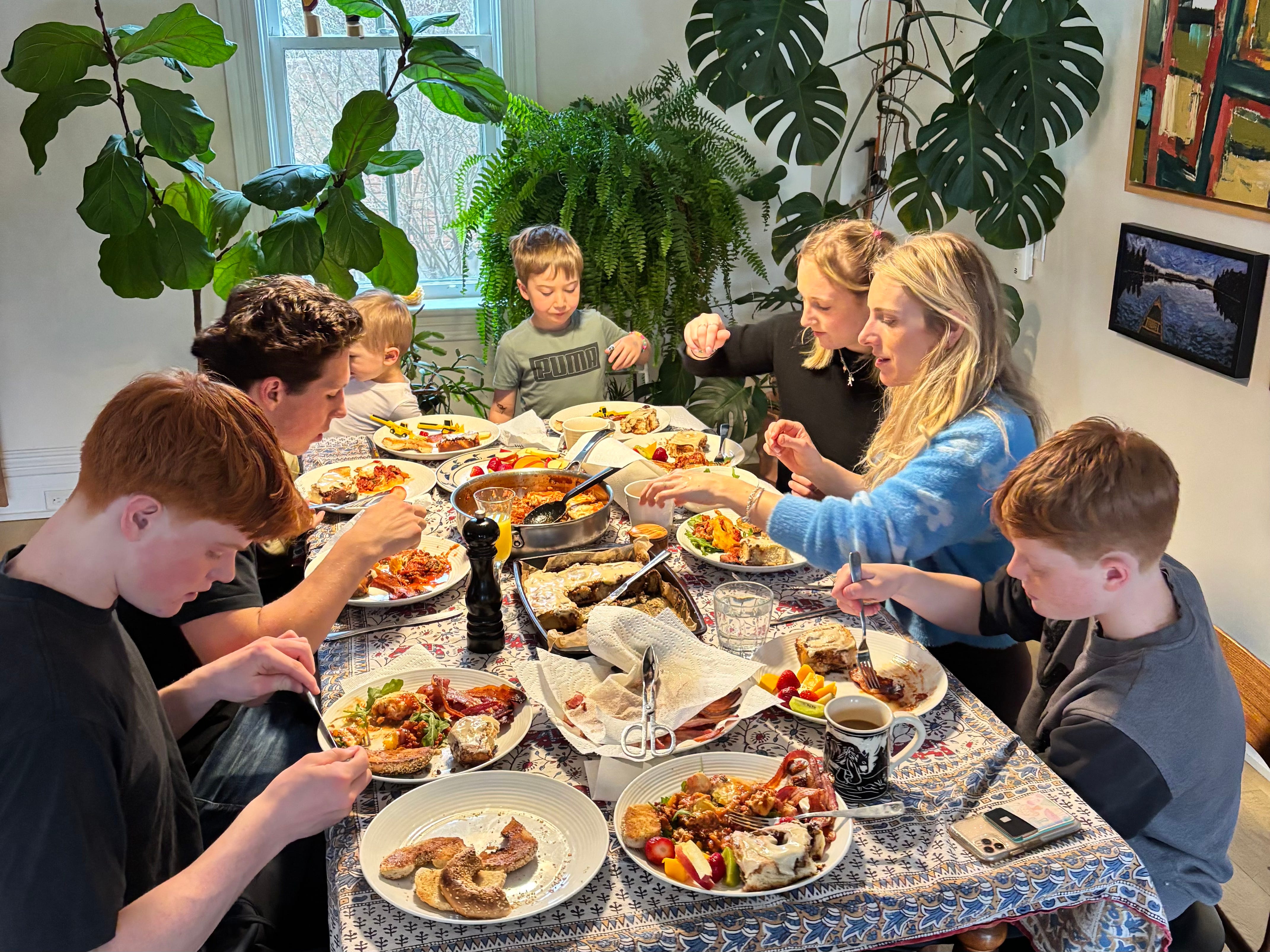
Sometimes I read a story, and it plants itself in my brain. I keep thinking about it, comparing it to my own life, wondering if I could do it myself. It doesn’t have to be a profound story, either—just something that challenges my usual way of thinking.
One such story is Amanda Litman’s year of Saturday dinners. I came across it in a Culture Study newsletter, which I almost deleted without reading, but then noticed a Google Sheet attachment titled “Saturday dinner menus.” And if you know me, nothing gets me more excited than a good list of recipes.
I clicked and discovered a fascinating fact—that Amanda Litman, a woman whom I’d never heard of before but now admire immensely, made a resolution a year ago to invite people for dinner every Saturday in 2025. She did it, with her husband’s help, hosting 141 adults and 80 kids over the course of the year. A few of those were repeats because, as she writes, “We don’t know that many people!”
Amanda Litman is obviously special for what she’s done, but she’s not special in the sense that you might be assuming—like she’s some kind of influencer or hostess extraordinaire who lives in a big swanky house with an unlimited catering budget. No, she’s the mother of two young children (a toddler and baby, from what I can tell), and she lives in an apartment with a dining table that fits four comfortably, six in a pinch.
In an end-of-year post, she explains that buying the extra groceries was cheaper than going out to eat or hiring a babysitter; that guests were asked to bring their own alcohol, but never any food; that dinner always started at 5 p.m. and ended before kids’ bedtimes; and that she aimed for “minimum viable cleanliness” in the apartment by focusing only on having a clean bathroom, clean floors, and clean tables.
Doing it every single week without exception made it more manageable than doing it occasionally, even though that sounds counterintuitive. It doesn’t surprise me, though. There is a mental shift that occurs when something goes from being a possibility to just what you do. Instead of debating whether you feel like hosting, on Saturdays you simply host—also knowing that, once those guests arrive, you’ll enjoy yourself far more than if you were sitting alone at home.
It’s not unlike exercise. When working out becomes a non-negotiable part of your daily routine, instead of something that depends on whether you can muster the willpower, it ceases to consume as much mental energy.
‘The Most Political Thing’
So, how does Amanda feel now, looking back on her remarkable year? She works as a professional political operative, recruiting and supporting candidates for office; and yet, she says, “Having dinner with friends 52 weeks in a row is the most political thing I did in 2025… To get to know your neighbors and build deeper, more meaningful relationships is what enables us to not just survive this era but possibly even thrive in and after it.”
That makes perfect sense to me. Breaking bread with friends, acquaintances, neighbours, and strangers you’d like to get to know builds connection on a level that is not possible outside the home. The more people you do this with, the safer and more humanized your community becomes. You get a better sense of who inhabits your neighbourhood. You build social bridges, cultivate trust, boost solidarity. You realize that the “other” is not as scary as you’d thought.
Like Amanda, I am an enthusiastic host, though my pattern is more cyclical. When I was unemployed for 15 months, I invited people for dinner almost twice a week. Now, with a busy work and travel schedule, it happens less, though I still have guests several times a month. I am primarily motivated by a love of food; I love cooking and want to share the delicious results with others.
But I benefit from the social aspect, too, investing in established friendships and forging new connections with people I am curious about. It exposes my kids to new and old faces and gets them used to carrying on conversations with adults. They practice their extra-good table manners. By inviting people into our home, we enrich our own lives without even leaving the house.
Inviters vs. Invitees
I am continually baffled, however, by how reluctant other people are to host. We receive relatively few invitations to dine at other people’s homes, compared to the number of times we invite people here. Litman has noticed the same thing: “I’ve had to get over keeping score or expecting to be invited back... Some people are inviters, some are invitees. Such is life.”
I wonder why this is. It’s true that hosting is a skill often normalized by one’s own parents and then honed through a personal process of trial and error over the years. But even if you didn’t grow up watching your parents host, you can still teach yourself how to do it.
Sometimes I wonder if that widespread reluctance is tied to the fact that social media has set an impossibly high bar for entertaining, by making “tablescapes” and food photography look so picture-perfect that people feel intimidated. If so, that is unfortunate, because most people, especially parents, appreciate being invited to dinner.
I have one friend who invites us several times a year for burgers on his back deck. He always warns us that “it won’t be fancy,” and it never is, but I am delighted to accept. It feels like a gift, not having to prepare the burgers myself (even if they’re just frozen from a box), and I welcome the chance to sit back and sip a drink while he does the grilling and the kids play.
Sometimes, when I’m feeling really philosophical, I even wonder if the reluctance to host is tied to our societal addiction to passive streams of entertainment. Have we become so apathetic, so socially lethargic, that we can no longer be bothered to do anything beyond the bare minimum required to make it through the day? Does the allure of our screens overpower the desire to connect with others in-person because it’s just so easy and does not require any planning or forethought? Have we forgotten how high-quality time spent in the company of others feels like food for the soul and leaves us energized like nothing else?
A Hospitality Revolution
I think we should all consider Amanda’s example and start inviting more people into our homes. As a society, we would benefit greatly from a hospitality revolution, in which our homes once again become our social hubs. For too long, we’ve outsourced that task to restaurants, coffee shops, bars, and other external venues, which adds unnecessary expense and hassle to our lives, especially when raising small children. It is not a relaxing experience to meet with friends when you’re worrying about your kids’ behaviour in the presence of other diners.
Entertaining at home, by contrast, puts everyone at ease (except, possibly, the host, for the reasons listed above, but those can be overcome). Hosting is a great communal family activity that incentivizes kids to get off their devices, pitch in with prep, and engage with guests. It motivates culinary experimentation and gives you a reason to try a recipe you’ve been eyeing for months. And if you warn your guests in advance that it’s a super casual event, you have nothing to worry about.
The Crappy Dinner Party
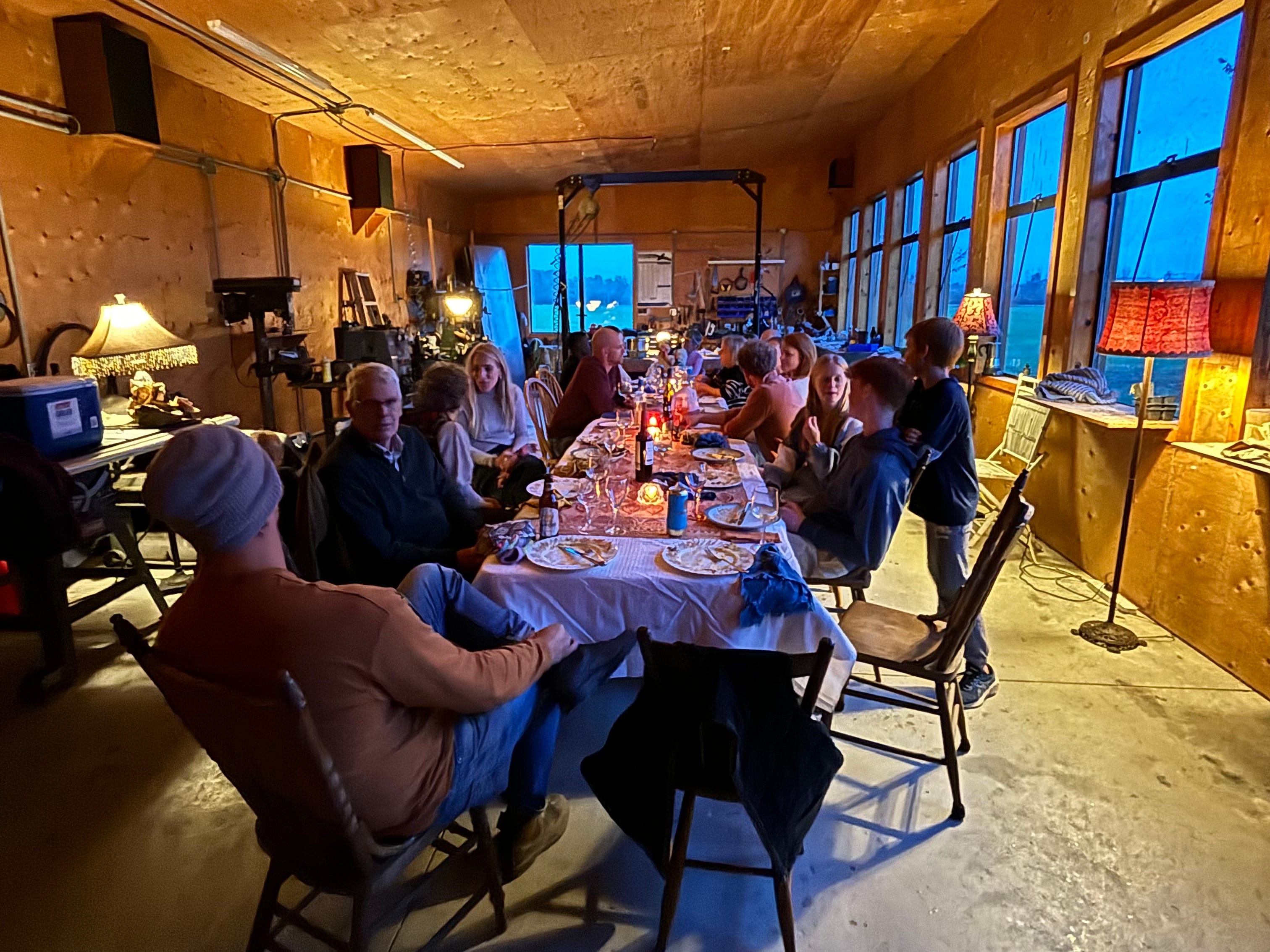
You could even give it a label, such as the Crappy Dinner Party, as described by Kelley Powell in a 2019 article for The Kitchn. Kelley was an exhausted working parent who used to feel tremendous stress prior to a guest’s arrival, until she decided to let it all go in an effort to see her friends more often. Now, her dinners follow these rules, which her guests also understand:
No housework is to be done prior to a guest’s arrival.
The menu must be simple and not involve a special grocery shop.
You must wear whatever you happen to have on.
No hostess gifts allowed.
You see, as soon as you remove the fluff—all those extra stressors that make entertaining feel intimidating—you get a completely different view of it. The experience becomes focused on being with people you like. Yes, the food needs to be good, but it doesn’t have to be complicated. There should be wine, but it doesn’t have to be expensive. Music should be playing, but no one’s really listening.
Deep Casual Hosting
Another approach is Katherine Goldstein’s “deep casual hosting.” She says you shouldn’t aim to wow your guests. Show some vulnerability about what your life and home are really like: “The more stops you pull out, the more intimidating it will be for others to invite you to their house.” When it comes to making a menu, she sticks with simple meals: “When thinking about having people over, I often think, “What am I going to cook anyway that I can just make more of?’”
She recommends accepting guests’ offers of help, whether it’s bringing a minor ingredient or dish, helping clear the table, entertaining children while you finish cooking, or unloading the dishwasher. Lastly, don’t hesitate to make last-minute plans. Having only an hour’s notice might help to put guests at ease, too, since they know not to expect anything elaborate.
If hosting is entirely daunting, you could start by having a potluck. Invite close friends for a meal and assign each one a different course. You could set a theme for the meal or leave it entirely open-ended, which could result in some interesting (but delicious) combinations. Again, it doesn’t matter; the point is simply to have a reason to gather around a table and share food and stories.
It seems fitting that, while I was poring over Amanda Litman’s impressive spreadsheet, a friend emailed to say she’ll be passing through town this weekend and wondered if we could meet for a walk or “grab some food.” I wrote her back immediately: “Come for dinner. I’ll cook.” I am unable to commit to hosting every Saturday, but I will do it whenever I can. I am already looking forward to it.
You Might Also Like:
Updates:
I had a column in the Globe and Mail newspaper this week: “In a screen-time battle with your kids? Here are 7 resolutions you might actually keep.”
In keeping with the resolutions theme, I was more than a little excited to discover that one of my favourite writers, Oliver Burkeman, quoted me at length in his New Year’s column for The Guardian: “The secret to being happy in 2026? It’s far, far simpler than you think.”
In case you missed it, I did a 30-minute interview for the Closer Look podcast just before Christmas, which I thoroughly enjoyed—a great conversation. Please take a look!
And because I work with seniors I encourage inviting your elderly neighbours. We are generally happy to eat early and leave early!
I am taking this to heart and inviting more people over this year.
Thanks so much for mentioning my work! This investment in social connection pays so many dividends